Boron Applique: Stitch Your Science Pride
Science-themed embroidery is having a moment. Whether you are a chemistry teacher looking to personalize your lab coat, a hobbyist stitching gifts for fellow science lovers, or a small business owner creating one-of-a-kind products for STEM events, the appeal of wearing your knowledge on your sleeve—literally—is undeniable. The Periodic Element 5 B Boron Applique offers a precise, polished way to showcase element number five in fabric form, combining clean scientific data with practical machine embroidery design.
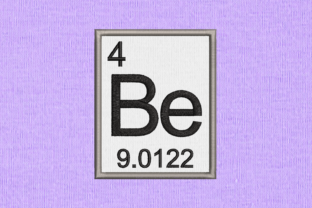
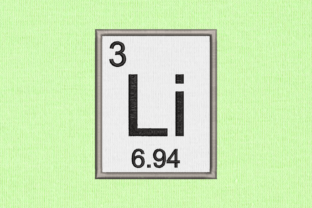
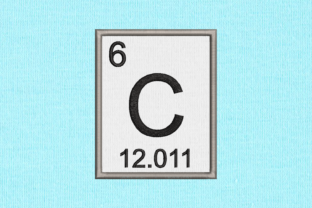
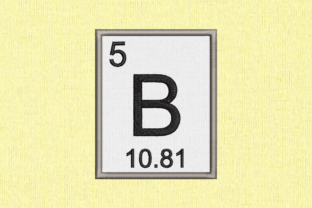
At its core, this design translates the element card from the periodic table into an applique rectangle. It includes Boron’s letter symbol (B), its atomic number (5), and its atomic mass units. Rather than a simple text stitch, this is a structured motif that reads clearly from a distance and holds up well on garments, bags, and accessories. If you have ever tried to digitize a periodic table element yourself, you know how tricky it can be to get the proportions right. This file does the heavy lifting for you, delivering a finished look that feels intentional and professional.
What Makes This Design Stand Out
Several qualities set the Periodic Element 5 B Boron Applique apart from generic science embroidery files. First, the layout respects the classic periodic table card format. The rectangle frames the data, giving it the visual weight of a textbook illustration while keeping the stitch count manageable. The letter symbol sits prominently, with the atomic number above and the atomic mass below, mirroring what students see on wall charts and in classrooms.
Second, the design comes in nine embroidery formats, covering the most common machine types. Whether you run a Brother, Janome, Pfaff, Husqvarna Viking, or Singer, you will find a compatible file in the zip. This is not a one-format-fits-all situation. The pack also includes five stitch sizes across four hoop sizes, giving you flexibility to embroider on a child’s backpack, a tote, a sleeve, or a full chest patch. You can scale the design up or down without losing clarity or proportion, which is essential when you are working with different base materials and hoop capacities.
Another notable quality is the color-change step separation. The design is organized so that each color group stops at a logical point. If you are using a single-needle machine, you can trim and switch thread colors without guesswork. If you use a multi-needle machine, you should set it to pause at each color change rather than letting it run straight through. This preserves the crisp boundaries between the fabric applique, the border stitches, and the text details.
Personal Projects and Wardrobe Statements
For anyone who loves chemistry or works in a science-related field, adding the Periodic Element 5 B Boron Applique to a denim jacket, a canvas apron, or a simple cotton t-shirt is a subtle yet meaningful move. Boron is not as widely recognized as carbon or oxygen, which makes it a conversation starter. People will ask, “Why Boron?” and that opens the door to talking about its role in borosilicate glass, flame retardants, or even neodymium magnets. The design fits well on a chest pocket or sleeve cap, and the applique fabric adds texture that screen printing cannot replicate.
Educational and Classroom Use
Teachers and educators can use this design to create classroom kits. Imagine a set of fabric periodic table patches that students can collect or earn throughout the year. The Periodic Element 5 B Boron Applique could be one piece of a larger, hands-on project where each student receives a different element patch and researches its properties before sewing it onto a collective banner. This kind of tactile learning sticks. Because the design includes both the atomic number and atomic mass, it is factually complete enough to serve as a teaching aid without additional labeling.
Small Business and Product Lines
If you run a shop on Etsy, Amazon Handmade, or at local craft fairs, science-themed goods have a dedicated audience. The Periodic Element 5 B Boron Applique can be stitched onto hats, lab coats, aprons, drawstring bags, and even patch-style magnets for lockers or whiteboards. Because the file comes in multiple sizes, you can offer the same design on different product types without re-digitizing. This saves time and keeps your product line consistent. You could also bundle all 118 elements eventually, but starting with Boron lets you test the market for single-element patches before committing to a full set.
Digital and Print-Transfer Hybrid Use
While this is a machine embroidery design, savvy creators can use it as inspiration for sublimation or heat-transfer projects. If you have a single-needle machine and a large order, you might stitch one sample Periodic Element 5 B Boron Applique and then scan or photograph it to create a digital template for other production methods. Keep in mind that the true value lies in the dimensional, stitched finish—digital copies will lose the texture that makes applique special. Use the embroidery file for the final products and reserve digital reproductions for mock-ups or listings.
Practical Considerations for Best Results
Before you start stitching, there are a few decisions that will affect your final output. First, fabric choice for the applique matters. Cotton twill works well for a matte, classic look. Felt gives a softer, kid-friendly feel. Denim creates a rugged patch aesthetic. Avoid slippery or stretchy fabrics for the applique base because they can shift during stitching and distort the rectangle edges.
Second, do not color sort or combine colors in the design file. The steps are separated by color changes for a reason. If you merge them, the machine may stitch the applique fabric placement and the tack-down stitch in the wrong order, causing the fabric to shift or bunch. Trust the original digitizing. If you are using a multi-needle machine, set it to stop at each color change rather than threading all colors at once. This gives you a moment to check placement and tension before moving to the next step.
Third, stabilizer selection makes or breaks the design. Because applique involves multiple layers of stitching (placement line, tack-down, satin border, and text), a cut-away stabilizer is recommended for garments. Tear-away can work for stiff fabrics like canvas or felt, but for t-shirts and knits, cut-away prevents puckering around the rectangle borders. Test on a scrap piece of your final fabric before committing to the actual garment.
Who Benefits Most from This Design
The Periodic Element 5 B Boron Applique is not limited to hardcore chemists. It suits a broad range of users:
- Hobbyist embroiderers who enjoy stitching educational patches for family and friends.
- STEM outreach coordinators creating giveaways for science fairs or museum events.
- Freelance makers who take custom patch orders and need reliable, scalable files.
- Publishers and bloggers in the science communications space who want branded merchandise for their audience.
- Entrepreneurs building a niche brand around laboratory-inspired apparel.
Each of these users will appreciate the format variety and the straightforward step-by-step stitching sequence. The design does not require advanced digitizing skills to use, which lowers the barrier for beginners while still delivering a result that looks complex.
Why Applique Over Standard Embroidery?
You might wonder why you would choose an applique design over a standard filled embroidery design for a periodic element. The answer comes down to coverage, weight, and texture. A fully stitched element square would use thousands of stitches, making it heavy, stiff, and time-consuming. Applique uses a fabric base for the large rectangular area, then stitches only the borders and text. This keeps the design lightweight, flexible, and faster to produce. The fabric base also adds a tactile dimension—the Boron rectangle feels like a patch rather than a flat embroidery block. For wearables, especially on the chest or shoulder, this makes a real difference in comfort and drape.
Bringing It All Together
The Periodic Element 5 B Boron Applique is a thoughtful, functional design for anyone who wants to merge science literacy with machine embroidery. It respects the periodic table’s visual language, adapts to multiple machines and hoop sizes, and leaves room for creativity in fabric selection and final product application. Whether you are stitching a single patch for yourself or producing a batch for an event, the file gives you a reliable foundation. Pay attention to stabilizer, follow the color stops, and choose a fabric that complements your project’s purpose. With those basics handled, you can focus on the fun part—showing the world that element number five matters.