Periodic Element 6 C Carbon Applique Design for Science Fans
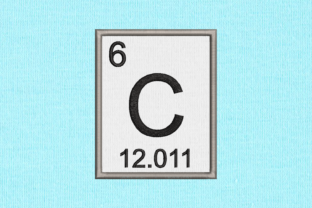
There’s something deeply satisfying about wearing your curiosity on your sleeve—literally. The Periodic Element 6 C Carbon Applique machine embroidery design turns a love for science into wearable, stitched art. Whether you’re crafting for yourself, building a small business, or designing gifts for fellow science enthusiasts, this applique offers a clean, recognizable way to showcase the building block of life: carbon. With its atomic number 6, symbol C, and atomic mass units neatly arranged inside a stitched rectangle, this design feels both educational and intentional. It’s not just decoration; it’s a statement about what you value.
The visual appeal of this design lies in its clarity. The rectangle frames the element’s details like a tiny plaque, giving the embroidery a structured, almost archival look. The letter symbol sits prominently, while the atomic number and mass units balance the composition without crowding. This isn’t a flashy, over-the-top design—it’s precise, clean, and quietly confident. The color changes separate each step, so the applique builds layer by layer, adding depth without complexity. Whether you stitch it onto a lab coat, a tote bag, a jacket sleeve, or a pillow, it reads instantly as intentional and smart.
What makes this design especially appealing is its versatility. Carbon is a universal element—it’s in diamonds, graphite, life itself—so the design resonates across audiences. It doesn’t shout; it invites conversation. For crafters and hobbyists, it’s a rewarding project that looks professional without requiring hours of digitizing. For small business owners, it’s a product that taps into the enduring popularity of science-themed merchandise. The personality of this applique is straightforward and nerdy in the best way, appealing to people who appreciate precision, learning, and a bit of understated flair.
Where the Carbon Applique Works Best Across Projects
Because the Periodic Element 6 C Carbon Applique is a display design—meant to be seen and recognized—it thrives on items where the wearer or user wants to express identity. Think of it as a conversation starter. On a lab coat or a study bag, it signals belonging to the science community. On a casual hoodie or hat, it adds a quirky, intellectual edge. The design’s rectangular format lends itself well to patches, which can be stitched onto backpacks, jeans, or even framed as miniature wall art. It also works beautifully on kids’ clothing for parents who want to encourage curiosity from an early age.
For entrepreneurs and small business owners, this design opens up several product lines. Science-themed apparel is a steady niche—teachers, students, healthcare workers, and hobbyists all seek unique designs that reflect their interests. You can offer finished items like embroidered caps, tote bags, or aprons, or sell the applique patches themselves for customers to iron or sew on. The design’s clean layout also makes it suitable for embroidery on towels, pillowcases, or even table linens for a themed dorm room or classroom. In publishing and content creation, this applique can appear on merchandise for educational channels, blogs, or podcast merch—anything where a distinct elemental identity helps build a brand.
In digital spaces, the design translates well into social media graphics and product listings. The simple, blocky format is easy to photograph or scan, and its recognizable periodic-table aesthetic stands out in thumbnails and feeds. If you’re a blogger or content creator covering science, education, or maker culture, this design can become a signature visual cue for your brand. Repeat customers will associate the elemental badge with your style, building recognition over time.
How This Applique Influences Brand Identity and Audience Engagement
Choosing the right design assets shapes how your audience perceives your brand. The Periodic Element 6 C Carbon Applique communicates intelligence, precision, and a love for the fundamentals. When a customer sees this patch on a jacket or bag, they immediately associate the wearer with science, education, or analytical thinking. For a brand, this design reinforces a perception of credibility and curiosity. It’s not a random graphic; it’s a specific, meaningful symbol that invites identification from like-minded people.
The visual hierarchy here is straightforward: the symbol C dominates, the atomic number and mass support it, and the rectangle frames everything into a cohesive unit. This layout ensures readability even at smaller stitch sizes. Because the design is built in color-separated steps, the final result has crisp edges and clear contrast. This consistency matters for brand identity. If you’re selling custom apparel or patches, a clean, legible design builds trust. Customers know exactly what they’re getting, and the professional finish encourages repeat purchases.
Engagement comes from the personal connection. People who love science want to express that identity. The carbon applique gives them a way to do so without clichés—no cartoon atoms or generic lab symbols. It’s authentic. For your marketing, emphasize the story behind the element. Carbon is the basis of organic chemistry, the element of life, the stuff of diamonds and coal. That narrative adds depth to a simple applique, making it more than just a design: it becomes a badge of belonging. Use this in product descriptions and social posts to build an emotional link with your audience.
Practical Guidance for Choosing and Using This Embroidery Design
Before you stitch, consider your project’s fabric and hoop size. The Periodic Element 6 C Carbon Applique comes in nine formats across five stitch sizes for four hoop sizes, all packaged in a zip file. That variety means you can scale the design to fit different items—small enough for a sleeve or cap, large enough for the back of a jacket or a tote face. Evaluate your machine’s compatibility first. The design supports multiple embroidery file formats, so whether you use Brother, Janome, Singer, or another brand, you’re covered.
Pay attention to the color change instructions. Each step is separated by color; the software advises not to color sort or combine colors. If you’re using a multi-needle machine, set it to stop for color changes. Following this order ensures the applique builds correctly—base fabric, then satin stitches, then detail work. Testing on scrap fabric first is always a good move. Check the stitch density and make sure your stabilizer matches the fabric weight. For heavier items like denim or canvas, use a cutaway stabilizer. For lighter fabrics, a tearaway may work, but test both to avoid puckering.
Think about placement. Because the design is rectangular and compact, it works well on structured areas. Centered on a chest pocket, on a cap front, or along a sleeve band all look intentional. Avoid highly curved surfaces unless you’ve tested the hoop positioning. The design’s clarity is its strength, so let it sit somewhere it won’t be distorted. If you’re offering custom orders, consider asking customers which element they want and offering a series—carbon is just one of many, but it’s a strong starting point because of its universal recognition.
Design Observations and Recommendations for Maximum Impact
From a design perspective, the carbon applique works best on solid, neutral backgrounds. White, black, gray, navy, and forest green let the stitched rectangle stand out. Bright or busy fabrics can compete with the clean lines, so keep the backdrop simple. The applique itself can be stitched in contrasting thread colors—light on dark fabric, dark on light fabric—to maximize visibility. Because the design includes the atomic number and mass units, thread colors that distinguish each element will help readability, but you can also keep it monochromatic for a subtle, modern look.
If you’re building a product line, consider pairing this applique with other elemental designs to create a collection. Customers who buy carbon often want hydrogen, oxygen, or nitrogen to complete a set—especially for teacher gifts, science club uniforms, or STEM-themed merchandise. The consistent rectangle format ties them together visually, making the collection look curated. For branding, you can add a small logo or text below the rectangle, but leave breathing room so the design doesn’t feel crowded.
For content creators and bloggers, this design offers a visual shorthand. Use it in YouTube thumbnails, Instagram posts, or blog headers to instantly signal science content. Its clean, graphic nature photographs well and doesn’t rely on complex textures. If you’re writing about the periodic table, chemistry, or DIY projects, embedding an image of the stitched applique adds authenticity and authority. It shows you’ve actually made something, not just talked about it.
The Periodic Element 6 C Carbon Applique is a practical, meaningful design asset for anyone in the creative or small business space. Its appeal rests on clarity, relevance, and the quiet joy of showing what you know. Whether you’re stitching for yourself, for customers, or for a brand, this applique delivers on both style and substance. Start with carbon, and you’ll find a whole periodic table of possibilities waiting.